


According to U.S News report, the key difference between public and private schools is that “Public schools are funded by taxpayer dollars, while private schools are funded through tuition and donations.” The idea is that if parents want an expensive yet premium education, they enroll their child in a private school, while public schools are funded by taxpayers and therefore are supposed to be accessible to all.
Unfortunately, in modern public schools the idea that public education is free doesn’t hold up. Athletics, clubs, concurrent enrollment, honors, Advanced Placement (AP), graduation, and more are all increasingly fee based. These fees are becoming more common as schools search for a way to afford offering a variety of programs.
The situation is only going to get worse. Jefferson County, along with many districts across Colorado and the nation, is seeing declining enrollment, with tax revenues failing to keep pace with increasing costs. As a result, funding shortfalls have appeared, with as much as 45 million needing to be cut from Jeffco’s district budget. Arvada West alone is facing an approximate 3.9 percent budget reduction, or 539,699 less funding dollars.
President Donald Trump’s dismantling of the U.S Department of Education hasn’t helped either, although only about eight percent of education funding comes from the federal government, with the remaining 92 percent coming from the states.
Overall, less funding is available, potentially leading to program cuts or an increase in fees. As families bear the brunt of budget cuts and students are squeezed out of programs meant to benefit them, many are left wondering: isn’t public school supposed to be affordable, much less free?
AP and Honors classes
Student fees are currently high because classes often have a fee attached to them. Over 150 courses offered at Arvada West for the 2025-2026 school year include a fee, and even standard classes are seeing additional costs creep in.
Arvada West’s financial secretary, Leslie Crosby, shares, “Class fees are charged based on items that are used in the class. For example, for ceramics, the fee provides the necessary items to complete projects such as clay, glazes, etc. For food classes, it is the safety items and food to complete labs; for other courses, it is for workbooks.”
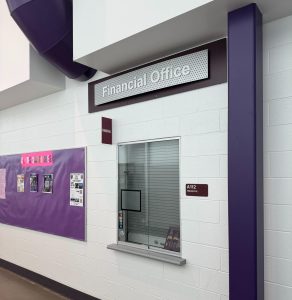
While these fees are seen as necessary, they go against the very idea of public education being free and accessible for all. They also aren’t avoidable; almost every class has fees, and they often stack on each other to reach staggering amounts.
However, some classes carry more costs than others. Enter the main offenders: Advanced Placement (AP) and concurrent enrollment classes. These classes, which offer college level courses to high schoolers, were created to reduce costs and increase access to higher education; in reality, they often are inaccessible to lower-income students due to the costs associated with them. And while some school districts cover class costs, each AP and Concurrent Enrollment class carries fees for various materials, mainly textbooks and workbooks.
The Concurrent Enrollment Racial Equity Report published in 2018 by Young Aspiring Americans for Social and Political Activism (YAASPA) highlighted that participation in dual enrollment programs is declining in the very populations they were created to help: students who qualify for low income services and students who are black and brown.
As a result, AP classes and concurrent enrollment, often heralded as opportunity pathways, are rendered inaccessible to large groups of students.
Some measures have been taken at A-West school and through College Board to combat this problem; the latter offers fee reductions to low-income students, theoretically making the tests affordable. But even these options are not well-known or spread; additionally, with students discouraged from taking AP classes in the first place due to price, these measures often are too little too late.
Crosby underscores this idea, stating “The information [about fee waivers] is easily accessible through either the AWHS [Arvada West High School] website or the Jeffco Public Schools Website, but, with all information, there is room for improvement on getting the information out to the families and community to better be able to serve the student body.”
Additional fees
Athletics and school clubs provide students an opportunity to excel outside the classroom, but entrance fees, material fees, equipment fees, banquet fees, and ambiguous ‘athletics fees’ have greatly increased. Uniforms are also now often at the cost of a parent, and there is rarely transportation, with the burden shifting to guardians and parents to transport students all over the Front Range.
Crosby adds, “Athletics [programs] charge a district participation fee that assists either partially or completely for various items such as coaching stipends, supplement schools’ equipment, District Administrative costs, stadium operating expenses, CHSAA [Colorado High School Activities Association] fees, Jeffco League Awards, Athletic Trainers, Event Security, Transportation, Game Officials and Game workers.”
Looking at the amount of money academics and athletics costs, it can be easy to overlook other aspects of high school, such as clubs, graduation, and activities. Yet all of these incur additional costs, from graduation gowns to field trip fees.
It is again important to note there are some programs available, including the Jefferson County Public Schools student benefits program, which can cover the cost of extracurricular fees, graduation ceremonies, and other district programs for low income students.
Crosby explains, “While all families are eligible for a free breakfast and lunch through a Federal Grant, Jefferson County provides access to a Student Benefits Application each year. When completing the Student Benefits Application, families can agree to share information from the form with the school(s) to avoid having to pay certain district or program fees.
Schools also push parents to fill out an application for free and reduced lunch, commonly used to help identify students that need other support.
“There are also a number of benefits other than subsidized meals available for students who qualify [for free and reduced lunch], such as reduced-cost or no charge testing (like, for the SAT and ACT tests), athletic fees, and summer day camps” NPR shares.
However, with school meals becoming free in Colorado through the Healthy School Meals for All program, less and less parents fill out this crucial form, leading to a lack of identification of students needing support. This, in turn, leads to further inequity.
Additionally, if you fall just outside the benefits zone but still struggle financially, these options are not available to you. Finally, community events have also become an equity issue: activities such as senior parking spots, student-run plays, and sports games are not covered by fee waivers and as a result are in no way affordable for many students.
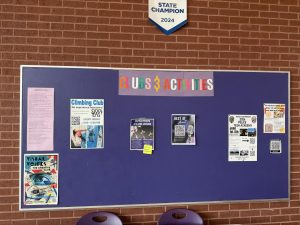
While some may argue school financial priorities need to be academics, where there are already glaring issues, a large part of high school is finding community and enjoying life as a teenager with more freedom. The cost of activities can stop students from enjoying their short time in high school, and lead to alienation and isolation.
Benefits programs need to be expanded to cover community events, ensuring financially disadvantaged students are supported not just academically but mentally as well.
The broader issue
Overall, it cannot be understated how the cost of public schools contributes to cycles of poverty. While the impact of the SAT has been lessened by many colleges going test optional, in part to benefit low income students who struggle with standardized tests or can’t afford a prep course, the shift to a focus on AP classes is not a magical fix.
As we have seen, fees for these classes can discourage those in poverty from taking them, shutting them out from programs supposed to benefit them. Additionally, minority racial groups and those in poverty in these programs fail these tests at a disproportionate rate, suggesting wider disparities within the programs.
As a result, instead of these tests uplifting students, they benefit the same groups who were already advantaged by standardized tests. The poor therefore often don’t get the AP credit or resume boost that comes with it, meaning they less likely can get into college (if they can afford to pay for it in the first place).
In turn, these individuals will on average get lower paying jobs without a college degree, and become stuck in a similar financial situation to their impoverished parents. Thus the cycle continues, chains of poverty re-forged by the very education system that espouses upward movement and merit-based achievement.
With the plethora of problems regarding fees in public schools, it is easy to get angry at individual schools and districts. It is important, however, to recognize that A-West is not trying to hurt their students; they are forced to have fees in order to function.
The education system, from a federal level downwards, is broken in many ways, and no more than in funding shortages. Programs are underfunded, teachers are underpaid, and there is simply not enough money to go around. In the end, that trickles down into parent’s wallets. As Jeffco plainly states in their Student Fee Guidance document, “Fees shall be necessary to support student achievement.”
While this may be true, we have already seen that the people who bear the brunt of these costs are those already struggling with poverty, as well as minority groups. A different approach is needed. At the federal level, at the state level, and yes, at the local level.
A-West, Jeffco, Colorado, and the United States as a whole don’t get a pass for fees. They have their reasons, but they also can do better. It is up to students, teachers, parents, lawmakers, and everyday citizens to ensure change happens.
As budgets shrink, so do pathways towards a truly free education system. And while it’s not too late, time is running out for equity to prevail over inequality. Public school is supposed to be free. It’s about time it actually becomes so.

C. J. Frandina • Jan 30, 2026 at 7:47 pm
This is truly an educational financial awareness article. As stated at the end of the article, it is past time to address a workable solution.
Emily • Jan 30, 2026 at 4:50 pm
Great piece, Madeus! Very well said.