
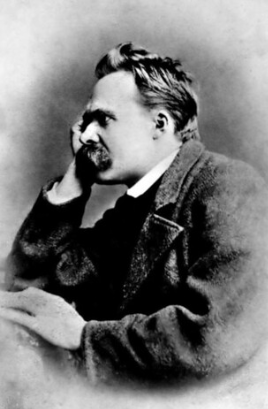
¨Gott ist tot¨, the words of German philosopher Fredrick Nietzsche, translates to God is dead. An extreme assertion, his statement is often found offensive to theists, yet historically misunderstood. Nietzsche first stated this in The Gay Science, which he proclaimed to be ¨the most personal of all my books.¨
The Gay Science refers to the freeing truth that our lives hold no divinity or oath to a higher power, which Nietzsche devoted his career to affirming. The active nihilism pioneered by Nietzsche asserts that it is in our hands to destroy old immorality and choose what is righteous; he contends that the spiritual wisdom our society continuously echoes has failed us.
As Nietzsche famously said, ¨God is dead. God remains dead. And we have killed him.¨
Despite Nietzsche’s profound atheism and profound rejection of Christ, the expression God is dead does not refer to a particular deity. Instead, this statement refers to the metaphorical death of morality, purpose, and truth in modern society.
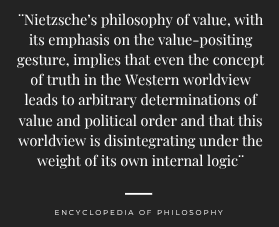
Regardless of one’s economic status, political party, religious affiliation, or race, everyone can agree that humanity is facing more and more moral challenges as time goes on. Whether it be war, corruption, or social discrimination, people are suffering in horrific ways while others feed on their tragedy.
Our current Western concept of righteousness is mistakenly interpreted as a product of the teachings found in Abrahamic religious texts, a concept that has failed us.
This is not an attack on religion, but an affirmation of Nietzsche’s sincere warning that deeply rooted, systemic issues cannot be faced with arbitrary fundamentals established over a millennium ago.
An article published by The Living Philosophy attests that ¨ When Nietzsche says that God is dead, he doesn’t just mean that the Christian God is dead; God here does not refer to the narrow religious definition but to the broader idea of the universal and transcendent truth.¨
Humans have always created conceptions of morality. We have not lost these concepts, but an understanding of their truth. The media and politics notoriously dissect our society into combatant groups, which view each other as the problem, when in actuality, the severance among our neighbors is a product of the greed and self indulgence of those in power, who thrive vicariously through our manufactured hatred for each other.
These are the times that Nietzsche spoke upon; where authorities and elites exploit our humanity with empty promises of peace and claims of faithfulness to an all loving and all powerful God.
It is time for us to embrace the challenging task of creating our own righteousness, instead of turning on each other in pursuit of a universal truth that will never be reached and only serves to segregate us in the process.
We must demand accountability from those who have prospered in our anger. Although religion can unite and instill meaningful virtues, it is urgent that we become creators of our own values rather than obedient sheep.