


Technology: The ability to have access to everything at the base of your fingertips, from 8:15 to 3:30. From one subject to the next, we stare at a computer, projector or a Mimeo board, and yet we were told that phones are the problem.
The amount of technology in the classroom is outrageous. In math, it’s a screen, science, a screen, English, a screen; the list goes on and on. Additionally, there are rarely hands-on assignments anymore, causing teenagers to suffer from headaches, eye fatigue and strain, neck pain, and overall tiredness.
The “Impact of Computer Use on Children’s Vision” shares about the damaging effects of extensive technology use, stating, “Extensive viewing of the computer screen can lead to eye discomfort, fatigue, blurred vision and headaches, dry eyes and other symptoms of eyestrain.”
And what would we call extensive viewing of a computer? Staring at a Chromebook or projector all day. In school, interacting with a screen is practically mandatory; almost everything has become digital now. On average, according to the New York Times, a student can spend up to three or more hours at school looking at a screen. If we multiply that by the minimum number of instructional days in Colorado, 160, the average time a student spends looking at a screen is at least 480 hours across a school year.
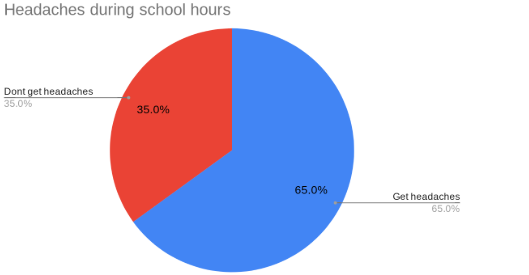
According to a survey of 40 students from a variety of grades, the results showed 65% get headaches often or semi-often after or during the school day.
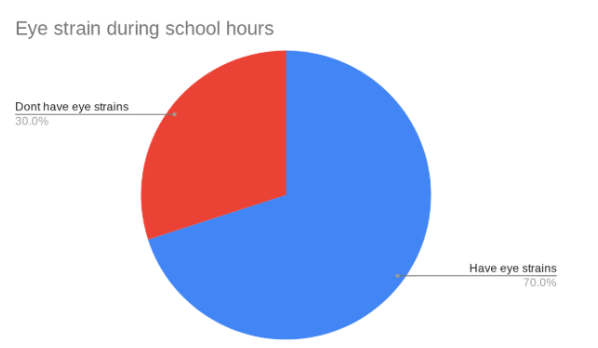
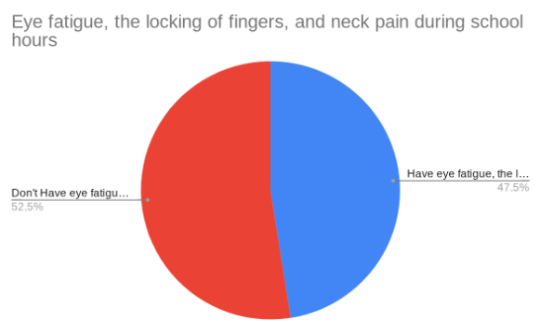
On top of this, 70% claimed to have eye strains during and after school regularly, and 45% said that they had experienced eye fatigue, the locking of fingers, and neck pain. and other symptoms.
Students already go through the mental stress of learning, hopping from screen to screen, but we also need to look at the data, have around 65% of students report having headaches, which should not be the standard.
When sitting through classes, 84% of students surveyed claimed feeling distracted or semi-distracted while working on assignments on the Chromebook. This shows that having feelings of being distracted, whether that be zoning out, feeling bored, the need to check emails, or completing different assignment are most common.
According to Lauraine Langreo, “Digital Distractions in Class Linked to Lower Academic Performance,” Langreo claims, “About two-thirds of U.S. students reported that they get distracted by using digital devices, and about 54 percent said they get distracted by other students who are using those resources, the PISA [Program for International Student Assessment], results found.”
Technology is supposed to help; it’s an ‘easier’ way to complete work. Especially if you’re sick, one click, and you can access the assignments. However, why do we need that in the classroom? If a survey of 33 students shows results that 84% get a form of headaches throughout the day, and 87% claim feeling somewhat distracted during viewing of assignments, shouldn’t there be a call for change? Students shouldn’t be going home or suffering at school with headaches due to having to stare at a screen for long periods of time. While having a short brain break can help, it’s not enough anymore.
Other studies have also reported students getting distracted, which truly shows how much of a problem technology in classrooms has become. While teachers can use it securely, and many require students to put their phones up, that doesn’t change the fact that students will still get distracted or off task. Looking at screens is a repetitive process throughout the school day, leaving room for students to zone out or not put as much effort as they could into work.
Blue light glasses are seen as a resource, necessary for those who get headaches when working on computers for long periods of time. Students shouldn’t need to go and seek other resources, yet some have to. Many of those who don’t experience eye strain from staring at a computer all day long. This is in addition to previously stated negative health effects.
Not all technology use is bad, though. Technology helps teenagers connect when they may be stuck at home. It also allows quick correspondence with teachers through Google Chat and Gmail, a much more effective way of communicating. According to the National Library of Medicine, “Positive Effects of Digital Technology Use by Adolescents: A Scoping Review of the Literature,” discusses, “Conversely, the empirical evidence indicates that digital media facilitates peer communication, connection, and closeness…and that engagement with tech at moderate levels is likely not deleterious…and may be promotive in a digital world.”
Though technology can be beneficial in some ways, we can now access everything from the internet, and being able to have all the knowledge at our fingertips with one question. Is it truly worth the fact that it’s now became to ubiquitous? We use it for everything. When do the students earn their break? Even though it can bring connection, it’s practically a connection with the screen, having to wait for the other person to reply, while in person, working on hands-on projects, you can bounce ideas off, and truly engage.
Though students do sometimes enjoy the use of technology, 87% of survey respondents prefer hands-on projects, including labs, experiments, posters, etc. Concurrently, 63% claimed they retain more information when the assignment was on paper rather than online.
While online work can be simpler, schools should focus more on the benefitting students in the long run rather than taking the easy road. If we slowly put more hands-on activities in class, teachers could see more engagement, and students’ health would surely benefit.
As a society that has now entered the digital age, we need to call for moderation. Not everything has to be online, for the sake of our health and engagement. Change can happen, and it starts with closing the Chromebook. Students need a break.

Ann Willis • Apr 10, 2026 at 10:10 pm
Wonderful essay. I could not agree more that screen/ digital use has crossed the line into harmful. Instead of a tool it feels that it is the whole curriculum. Thank you for taking the time to research this issue and share your findings.
Angie Simon • Mar 29, 2026 at 8:36 am
Fantastic argument. As a parent, I wholeheartedly agree that it’s time to close the Chromebooks and stop using screens for instruction and classwork.